



.30-30 Winchester: the first intermediate cartridge
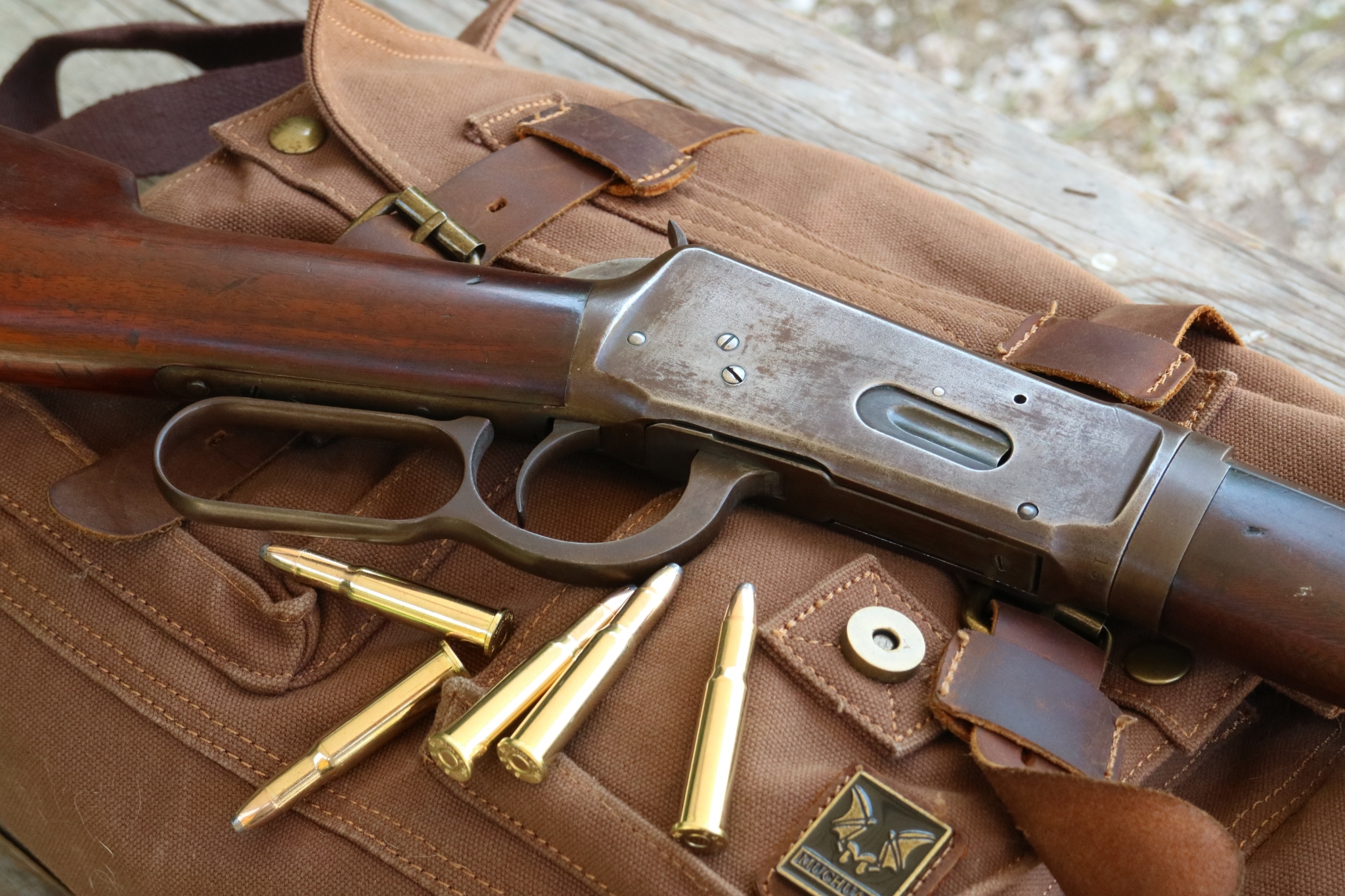
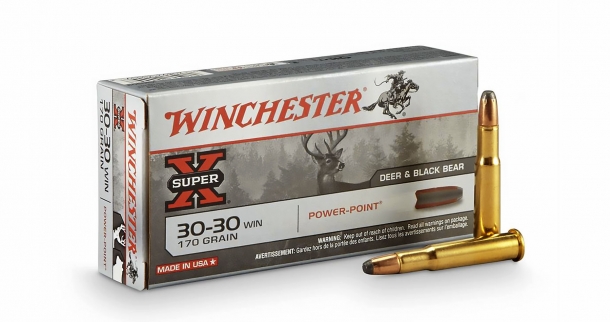
The .30-30 Winchester was introduced in 1895 together with the Winchester model 1894 lever action rifle, and was a huge commercial success.
.30-30 - La prima cartuccia intermedia

"Carabina treinta treinta, que los rebeldes portaban...", sang a song in a 1949 movie titled "¡Arriba el Norte!".
The Winchester 1894 was the first lever action rifle chambered for a modern, high-pressure bottleneck cartridge loaded with smokeless powder: the .30 .30 Winchester Center Fire, a.k.a. .30 WCF.
Marlin as well built a lever action rifle chambered for the same caliber, marketing it with the name .30-30, along the old custom of denominating a cartridge based on the caliber and powder load, in this case, 30 grains of Cordite.Marlin's denomination got a hold and became much more popular than “.30 WCF”, and is still in use today.
What made the .30-30 cartridge and the Winchester '94 that chambered it so notable was that, up until that moment, the vast majority of Winchester lever action rifles (with the exception of the model 1886) had been chambered for pistol caliber cartridges.
These carbines and rifles were light, fast, much more accurate than a handgun, but even if their longer barrel allowed cartridges like the .44-40, the .38-40 and the .45 Colt to rech farther and hit harder than a handgun, their ballistic performance was still fundamentally that of a pistol cartridge.
At the other end of the spectrum there were single shot rifles, or bolt action rifles, both military or for hunting, or the imposing Winchester model 1886.
These rifles were chambered for cartridges like the .45-70, the .45-90 and the .50-110, or the more modern, smokeless powder cartridges like the .30-40 Krag, the french 8x51 Lebel or the Biritish .303. They had a lot more recoil, they were cumbersome, heavy and slow to actuate, and had a reduced magazine capacity (when they had a magazine) compared with the more nimble pistol caliber lever action carbines.
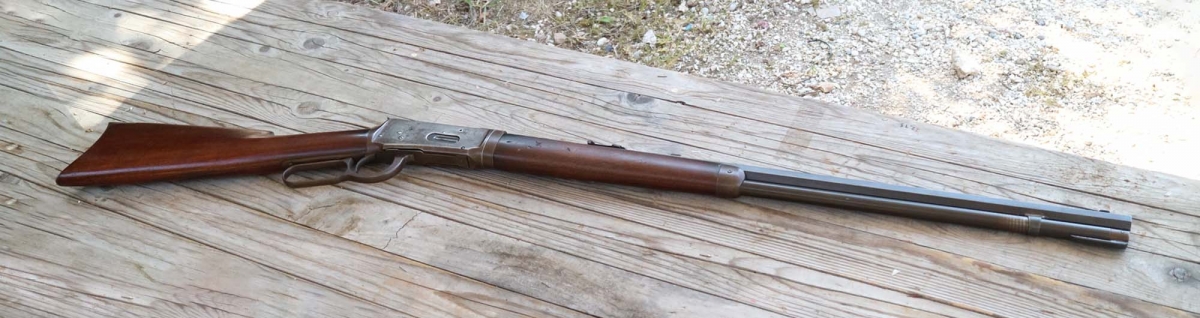
An original Winchester model 1894 rifle, chambered in .30-30 Winchester
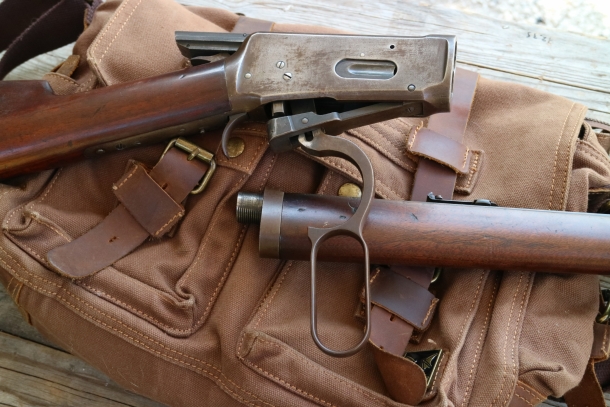
The original Winchester '94 used for the tests is even more peculiar, as it is a take down model
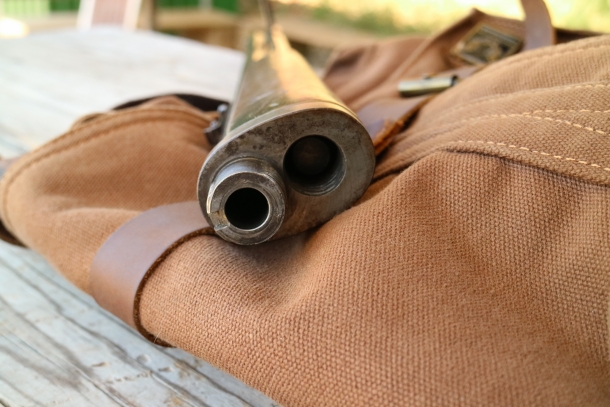
The barrel seen from the breech, with the rifle disassembled
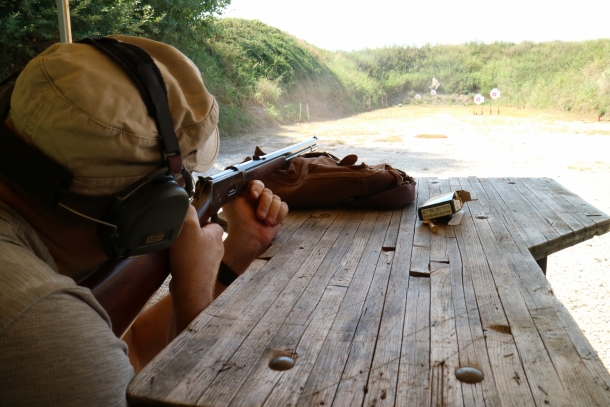
Testing the rifle at 50 meters. The picture freezes the moment when the bullet hit the berm behind the target, producing a visible dust plume
The .30-30 was developed as a smokeless cartridge powerful enough to allow the shooter a significant ballistic improvement over the previous pistol cartridges, while still remaining well behaved in a compact and light carbine, with a magazine caspacity that, with its 7 to 9 shots, was superior to that of the majority of contemporary bolt actions, which held 5 shots or less.
It was not the first, not the only "intermediate cartridge": the '94 was introduced with chamberings for the .32-40 Ballard and the .38-55 WCF, and subsequently for the .25-35 WCF, but they weren't as successful as the .30 WCF, that reached a perfect equilibrium between the pistol and rifle cartridges of the era.
The resulting combination of carbine and cartridge had enormous success, and got used to hunt middle-sized game like deer, boar and wild hog, and became very popular on the civilian market, among bandits and lawmen alike, both for hunting and self defense.
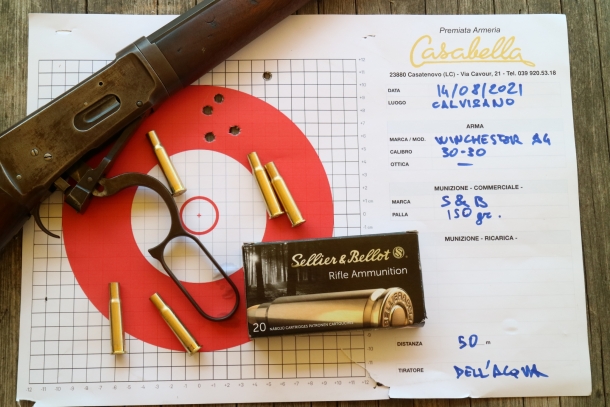
Age notwithstanding, and the iron sights not exactly easy to discern, the rifle is still capable of good accuracy
The .30-30 got very popular during the Mexican revolution, together with the Winchester '94 (one of the favourite guns of Pancho Villa) allowing rebel units to generate a remarkable volume of fire, with good accuracy, without being put at a ballistic disadvantage by the federal army at the typical engagement distance. It was so popular, in fact, that some years later a ballad was composed on the Winchester '94.
The Winchester '94 was in production for 112 years, from 1894 to 2006, when the last '94 got out of Winchester's production lines, after over 7.5 millions pieces had been manufactured, to which one must add the numerous other lever action rifles chambered for the .30-30 from other manufacturers, like Marlin, and the many replicas by brands like Uberti. This success made the .30-30 one of the most long-lived rifle cartridges, still effective for hunting and self defense, mainly against wildlife.
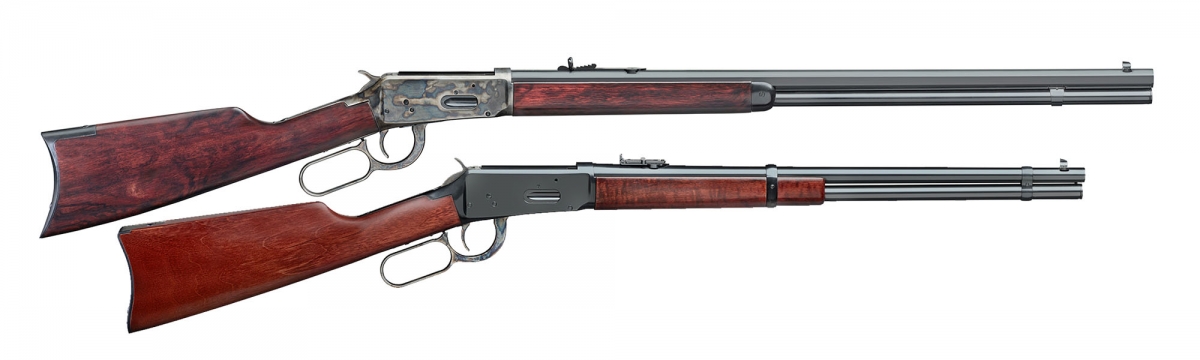
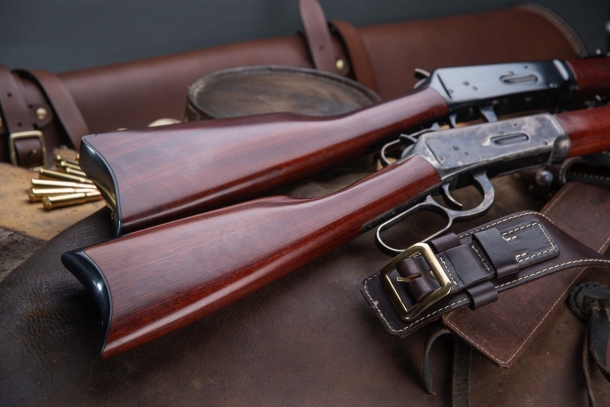
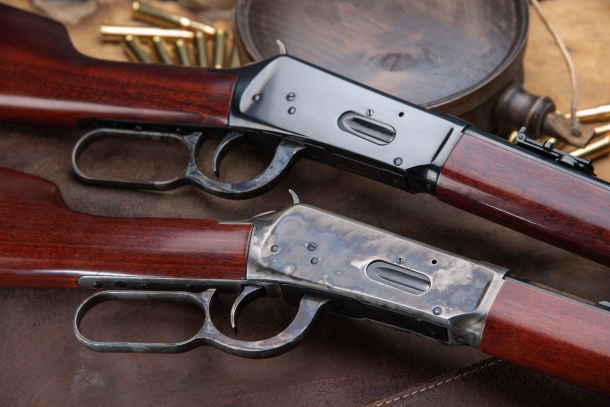
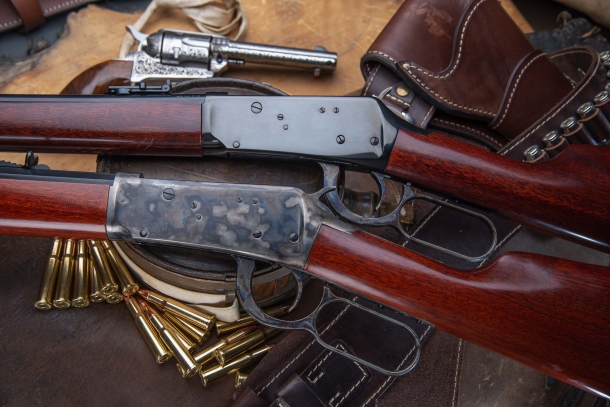
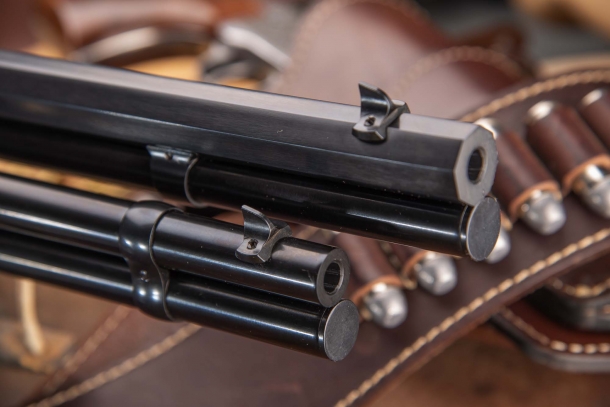
Two modern Winchester model 1894 replicas by Uberti, in the Rifle and Carbine versions.
In the picture one can appreciate the clean lines of the rifle designed by John Moses Browning, today beautifully and faithfully replicated by Uberti.
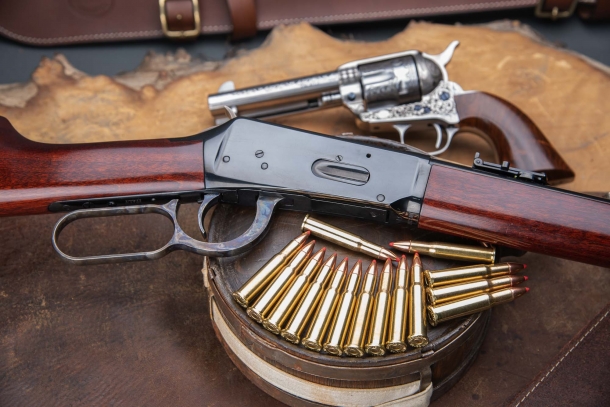
With a chamber pressure of 40,000 psi, it is a rather sedate cartridge for modern standards, but it was definitely a high pressure cartridge in its times. It fires a bullet with mass between 110 and 170 grains at a velocity of about 2660-2690 fps (810 - 820 m/s) for light bullerts and 2230 fps (680 m/s) for the heaviest bullets, with a muzzle energy of about 1844 ft lbs (2500 joules).
Most ammunition manufacturers still have a .30-30 loading in their catalog, and reloading components are quite easily available, with bullets typically of the flat soft point type, being a cartridge meant for tubular magazines. Some loadings, like the Hornady Leverevolution, have a pointed tip made of soft polymer, that combines safety in tubular magazines with a better ballistic coefficient.
Born at the sunset of the Western epic, the .30-30 and the Winchester '94 seem destined to be with us still for a long time, also thanks to the fine replicas made by Uberti.

The original Winchester '94 rifle in the pictures and the ammunition used for the test have been kindly provided by Armeria Casabella gunshop in Casatenovo (LC) - ITALY.
