



How to sell a gun collection: a complete practical guide
A guide to selling a gun collection: how to value it, the best selling methods compared, and what to know if you've inherited a collection, juggling through auction houses, dealers, online services, and more
How to sell a gun collection: a complete practical guide

Whether you have a collection that's outgrown your storage or inherited guns that don't fit your needs, you may want to know how to sell a gun collection.
The process definitely comes with questions that selling a single firearm doesn't.
How do you value dozens of guns at once? Is it better to sell everything together or piece it out? Which selling method gets you the best return without consuming your entire life?
And what if you don't know much about the guns you're trying to sell?
This guide walks through all of it – from valuation to selling methods to the logistics of actually getting it done.

How to figure out what your collection is worth
This is where most people either overthink it or skip it entirely. Both are mistakes.
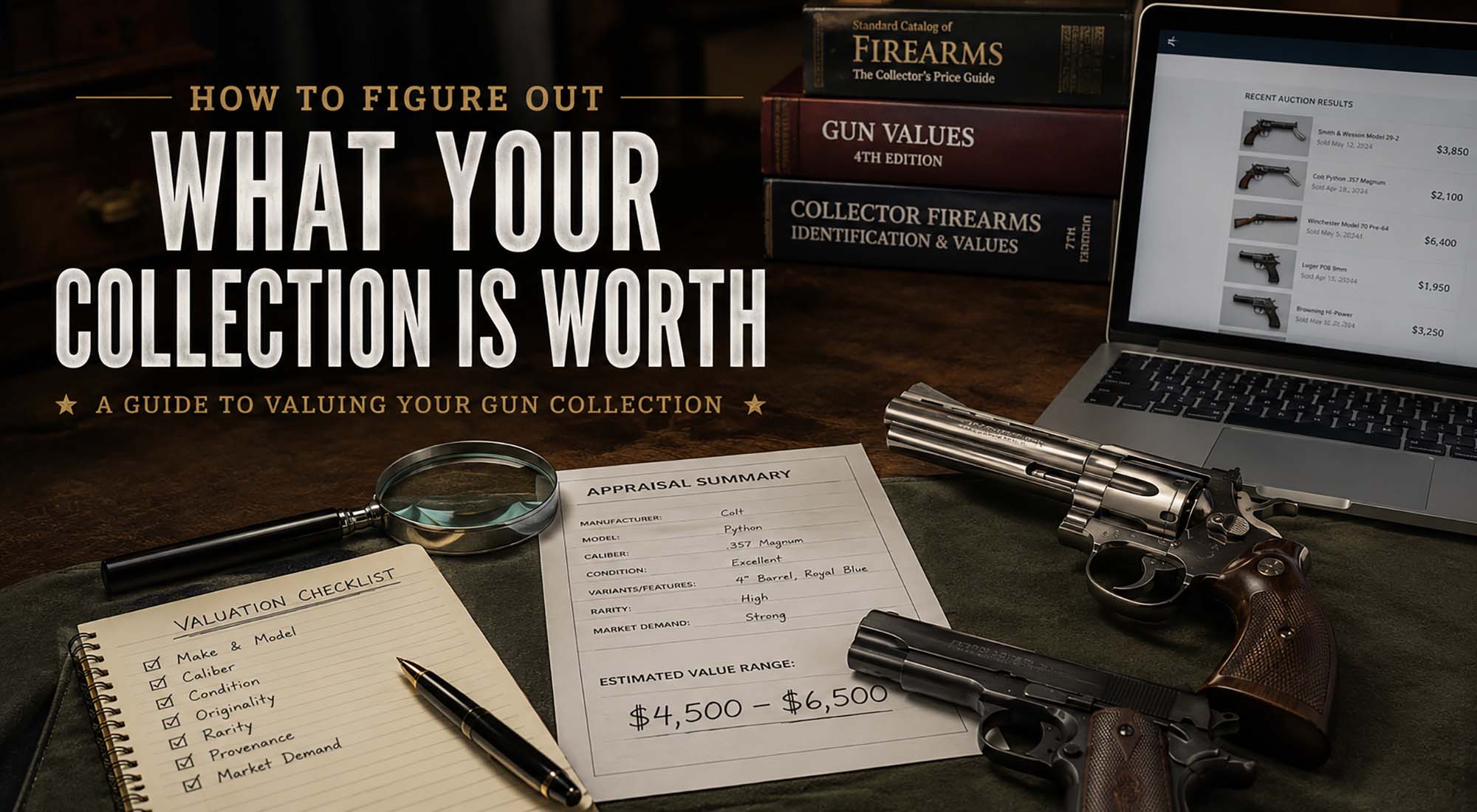
Start with a rough inventory. List every firearm with its make, model, caliber, and a basic condition note (excellent, good, fair, rough).
Photograph each one for overall shots plus close-ups of any wear, damage, or notable features like engravings. This inventory is your working document going forward. Then follow these general rules for valuation:
-
For common modern firearms: Your Glock 19s, AR-15 builds, Remington 870s, Ruger 10/22s. Value is straightforward for these. Check completed listings on GunBroker to see what they've actually sold for recently—not asking prices, but sold prices. That gives you a realistic baseline.
-
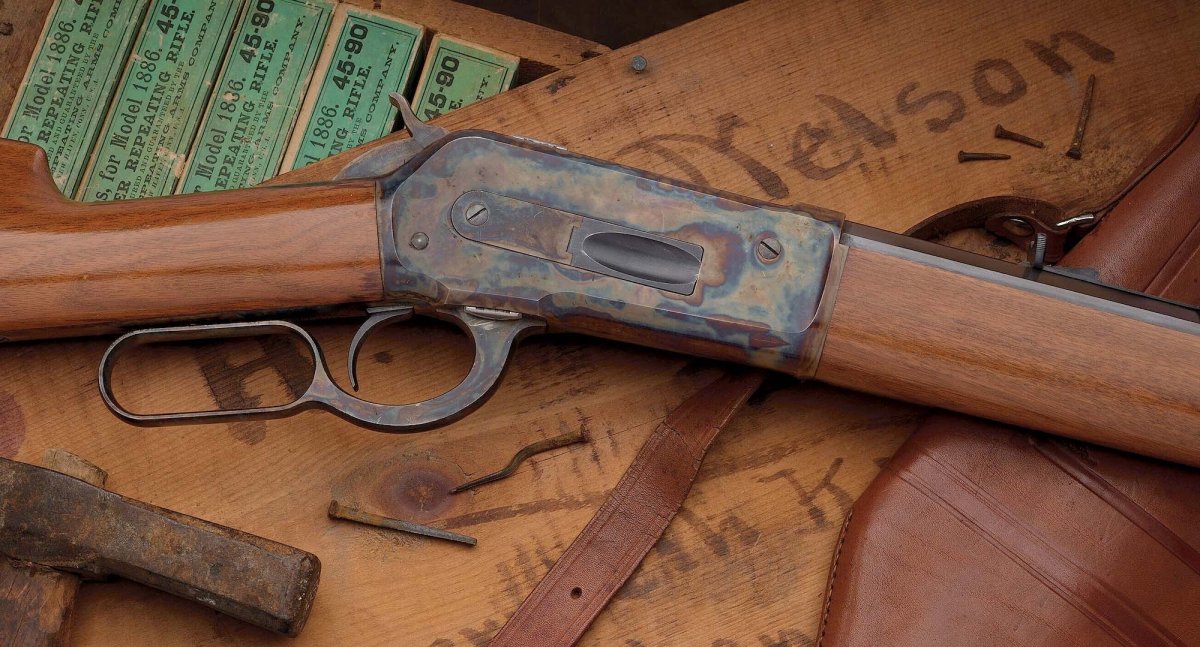
For older, rare, or collectible firearms: The math changes. A pre-64 Winchester Model 70 or a first-generation Colt Single Action Army can be worth significantly more than a generic price guide suggests… but only to the right buyer.
Blue Book of Gun Values is a starting point, but for anything potentially valuable, try getting a professional appraisal. Online FFL services like Cash for Arms, which buys entire gun collections, offer free appraisals as a starting poin – you submit your collection details and get an expert valuation without any obligation to sell.
-
For large collections: Don't try to value every piece individually unless you have the time and expertise. A collection of 30 guns might include a few standout pieces – a nice pre-war revolver, a desirable military surplus rifle – while the rest of the collection could just be a dozen common hunting rifles and shotguns. Get a ballpark per-gun average for the common items and focus your detailed research on the pieces that might be worth significantly more than the rest.
Quick tip: If you're not a gun person and you've inherited a collection, resist the urge to take the first offer you get.
Dealers who buy collections know that uninformed sellers accept lowball offers. Even a day of basic research can save you thousands.
Selling all at once vs. piecing it out
This is the biggest decision you'll make, and it comes down to time versus money.
Piecing it out or selling each firearm individually can net you more money in total. When you know what you’re doing, you can market each gun to the right buyer at the right price. A rare Smith & Wesson revolver goes to a S&W collector willing to pay full market value, for example.
The downside? It takes forever. If you have 30 guns, that's 30 listings, 30 negotiations, 30 transfers. For most people, that can take months of work… and even over a year of waiting.
Selling as a lot or selling the entire firearm collection in one transaction is faster and simpler, but may not net you as much as the pieced-out approach.
Buyers who purchase entire collections are taking on the work of sorting, listing, and reselling individual pieces themselves. They need margin to make it worth their time, which means your payout will often be less than the sum of individual sales.
The hybrid approach may work well for larger collections. Pull out the high-value pieces – the collectible Colts, the pre-war Winchesters – and sell those individually where they'll command full market price. Then sell the remainder as a lot.
This means you capture the top-end value on your best guns without spending months listing every $200 deer rifle one by one.
Selling methods compared
There's no single best way to sell a gun collection. Each method has trade-offs, and the right choice depends on the size of your collection, how quickly you need to sell, and how much effort you're willing to put in.
Auction houses
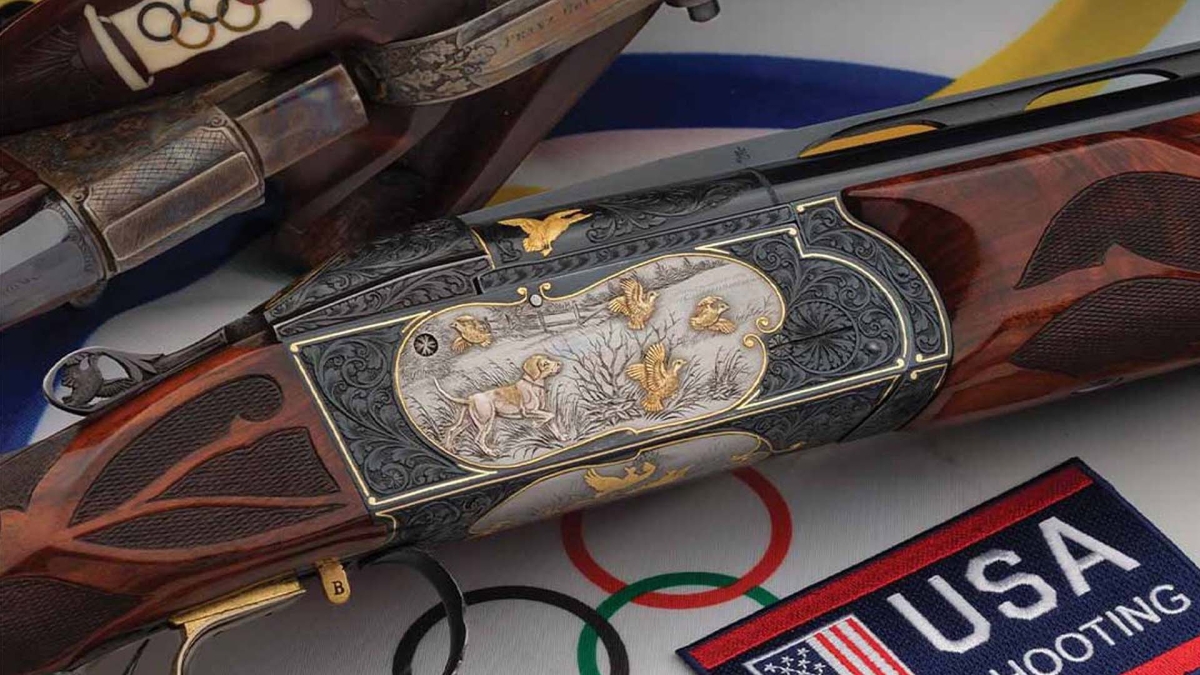
Gun-specific auction houses handle the marketing, cataloging, and buyer vetting for you. They attract serious collectors willing to pay premium prices for rare or desirable pieces. This makes them ideal for high-value collections or individual standout firearms.
The downside is cost and timing. Auction houses take a seller's commission, typically 15-30% of the sale price.
Many also charge a buyer's premium (often 18-20%), which doesn't come out of your pocket directly but can suppress bidding since buyers factor it into their maximum bids.
And you're on their schedule, not yours. It can take weeks or months from consignment to auction day to payment. There's also no guarantee of what the final bid will be.
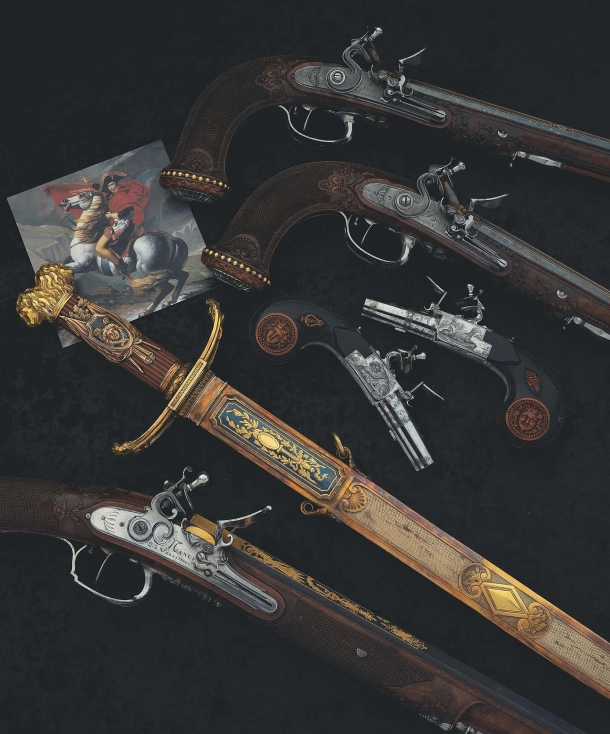
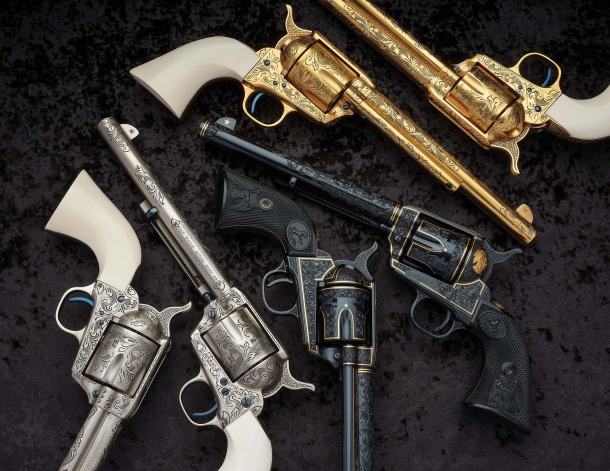
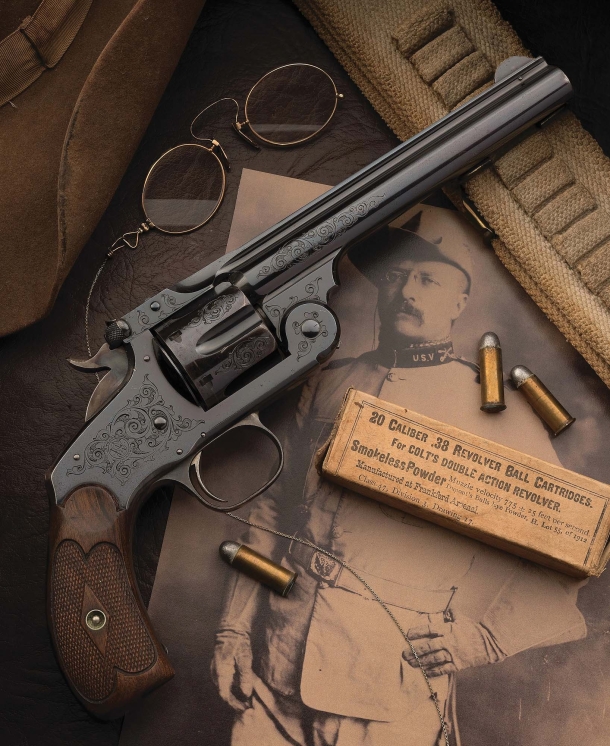
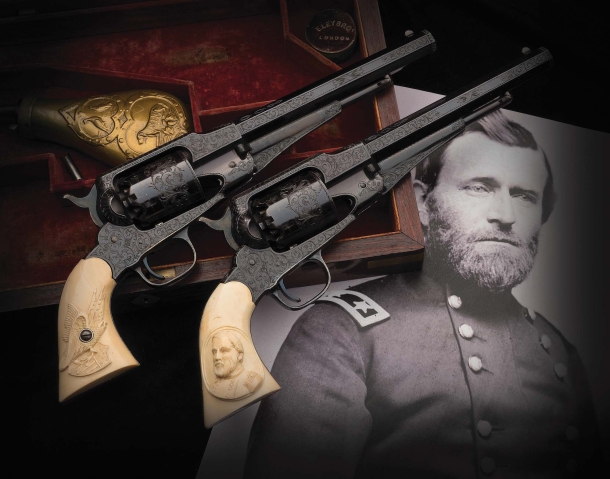
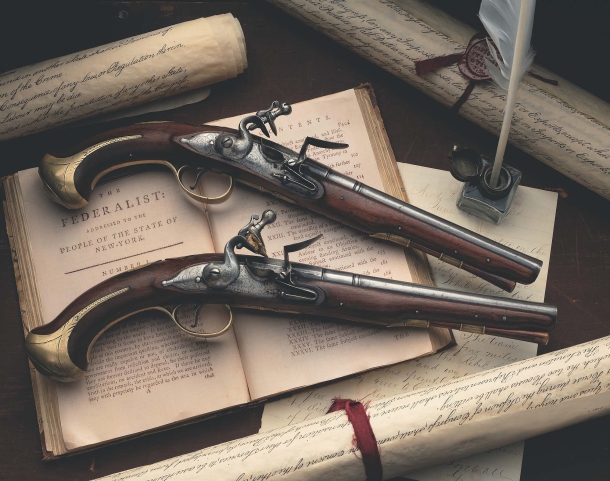
Worth considering if your collection includes rare, antique, or high-grade firearms. Think engraved Colts, documented military-issue pieces, or limited-production sporting arms. Less practical for a collection of common modern guns.
Local gun shops and dealers
Walking into a local shop with a collection is the most straightforward option. You get an offer, negotiate if you can, and walk out with cash or a check.
The trade-off is price. Dealers need to resell your guns at a profit, so offers will often be low, typically 50% of what the guns would fetch in a private or retail sale. For a large collection, that discount adds up quickly.
There’s also the possibility that the dealer won’t want a good portion of the collection. This ends with you having to split it up or piece it apart in the end.
Ultimately, this avenue works best when speed matters more than maximizing return, or when the collection is mostly common firearms without significant collector value.
Online FFL services
These services buy collections remotely. You submit details about your collection, receive a quote, ship the firearms, and get paid—all without leaving your house.
The main advantage is convenience, especially for larger collections. Instead of listing 30 guns individually or visiting multiple dealers, you handle the entire collection in one transaction.
Services like Cash for Arms specialise in buying entire collections, guns and parts included, and handle all the transfer logistics on their end.
In their case, they also have a reputation for making higher offers than most local dealers or auction houses.
This is significant because selling in bulk typically nets you lower profits than individual sales, as explained earlier. But if your buyer can negate that usual rule with competitive offers, it’s hard to beat this path since you get speed and simplicity too.

Consignment
Some gun shops and online platforms will sell your guns on consignment. They list and sell the firearms on your behalf, and you get paid when each one sells, minus a commission.
This splits the difference between selling individually and selling as a lot. You get closer to individual market value without doing the marketing yourself.
The downsides: it takes time (each gun sells on its own timeline), you don't control the asking price on some platforms, and commission rates vary widely (10 to 30%).
It’s best for collections where you want strong returns, don’t want to sell directly, and don't want to manage the sales yourself.
Gun shows
Gun shows give you access to a large number of potential buyers in one place. You can sell, trade, or test interest in your collection face-to-face.
The practical challenge is logistics. Transporting a large collection to a show, renting a table, and spending a full day (or weekend) manning it is significant effort.
And there's no guarantee you'll sell everything. You may end up hauling most of it back home.
Better suited for someone who enjoys the experience and has a smaller collection, or as a supplement to other selling methods for specific pieces.

Private sales
Selling directly to another individual – through forums, local classifieds, or word of mouth – cuts out all middlemen and typically gets you the highest price per gun.
The trade-offs are time, effort, and risk.
You manage everything: photography, listings, communication, price negotiation, and ensuring the transaction complies with Federal and State laws (which vary significantly for private sales).
For a large collection, this is a part-time job.

Selling an inherited or estate collection

This deserves its own section because it's a fundamentally different situation from selling a collection you built yourself.
When you inherit a gun collection, you may not know what the guns are, what they're worth, or even how many there are.
You may have no idea which of the guns are common and which might be genuinely valuable.
A few things to start you off:
You can legally inherit firearms in most states without going through an FFL, but the rules vary. Some States require registration or transfer paperwork even for inherited guns. Check your State's laws before doing anything. Google or a quick call to a local licensed gun dealer can clarify what's required.
Don't clean, modify, or "fix up" anything. This is critical. Collectors pay premiums for original condition, like original bluing or grips.
A well-intentioned cleaning or refinishing job on a pre-war revolver can destroy hundreds or thousands of dollars in collector value overnight.
Be wary of people who offer to "help" by buying the collection quickly. This is unfortunately common after a death.
Someone offers to take the whole collection off your hands at a price that sounds reasonable but is well below market value. There's no rush. Take the time to understand what you have before you commit to a sale.
If the collection is large or potentially valuable, a professional appraisal is worth the investment. Many auction houses and larger dealers offer appraisal services, sometimes free if you consign with them.
At minimum, use the inventory and valuation approach described at the top of this guide.

The bottom line

Selling a gun collection isn't complicated, but it does reward a bit of patience and preparation.
Know what you have, understand what it's worth, and pick the selling method that matches your priorities. That could be maximizing value, minimizing effort, or getting it done quickly!
For most people, a combination of methods works best.
Sell the standout pieces where they'll command full value, and move the rest as a lot through whichever channel fits your timeline.
And if you've inherited a collection you know nothing about, take your time.
The guns aren't going anywhere, and a week of research can be worth thousands of dollars. You’ll thank yourself for not rushing later.
