



Your first Cap and Ball revolver: a walkthrough
With so many "Cap & Ball" blackpowder revolvers on the market, it's natural for a beginner to wonder which one to buy first.
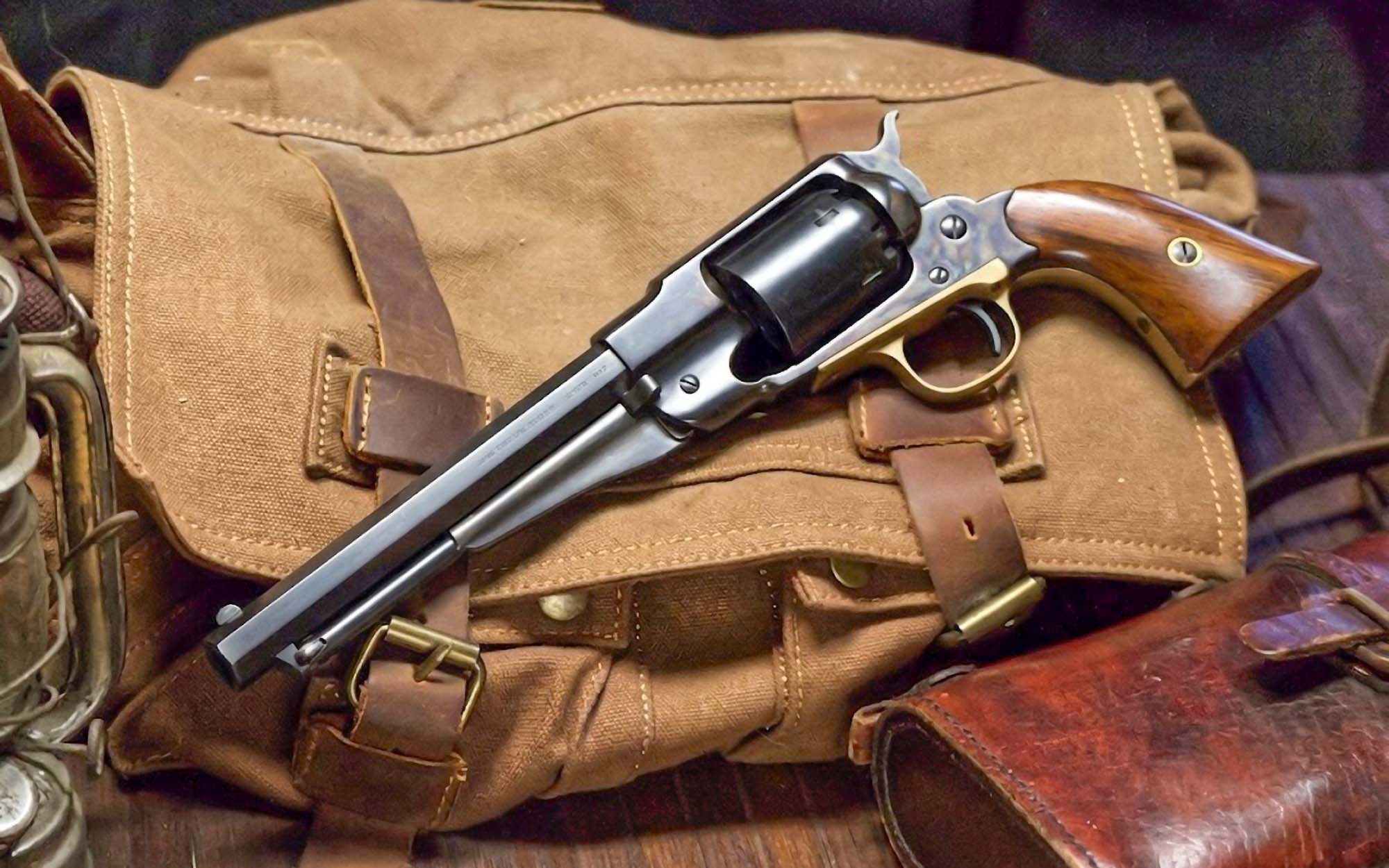
Your first Cap and Ball revolver: a walkthrough
When you approach the world of cap and ball revolvers, you fall into one of these two categories: you either already know that you want that specific revolver, for whatever reason, in which case this might not be for you (but let’s get a little further before closing this page), or you are wondering: “Which one should I get first?”. Even if you fall into the former category, You may still find some worthy information here.

Black Powder revolvers are still with us, thanks to well known Italian replicas manufacturers like Uberti and Pietta, that since more than 60 years allows shooters and histoy buffs all over the World to keep handling these absoutely interesting guns.
But exaclty because of the wide availablity of modern replicas models we have at hand today, understanding which type of revolver is best for a beginner is very important, as it could make the difference between a fun experience or a negative frustration that could put you off these interesting and fun to shoot firearms indefinitely.
In this article we will try to guide you in understanding the basic models that the modern industry of black powder revolvers still offers us today, trying to reach a conclusion about which "Cap & Ball" revolver is best for a new shooter.
The era of Black Powder revolvers

An original Colt Paterson (left) and a modern Uberti replica: as fascinating as it can be, a Paterson is not the right gun to begin with
Starting from 1850, black powder revolvers have been widely in use for about 20 years, before being progressivley replaced by cartridge revolvers, starting from around 1870.
The key characteristic of black powder revolvers was (and still is) their loading system: as a matter of fact, they were traditional black powder "front loading" guns, with the exception that instead of loading powder and ball from the "muzzle" of the barrel, you loaded powder and ball from the muzzle of each chamber of the revolver cylinder: and you had 5 o 6 shots available, instead of the single one of a traditional muzzle loading pistol of those times.
Because of this peculiar loading system, black powder revolvers are also commonly reffered to as "Cap & Ball revolvers" (due to lead balls you put in the front, and ignition caps you put at the rear of the cylinder) to distinguish them from those that came after them: the breech-loading revolvers, with metallic cartridges, and because of this commonly referred to as "cartridge revolvers".
Today, the actual choice of models for the neophyte is probably wider than it was on average back in the times, where you basically got what was available locally, at your town’s gun shop. And the wider availability of models is what can make the choice for your first revolver a bit daunting.
The following advices come from my long years of experience and experimentation, but they do not claim to be absolute truths.
Personal shooter’s experiences and preferences can vary a lot: what we want to achive here is to allow you to understand the basics and be able to orient yoursellf in the fascinating world of modern black powder revolvers.
Cap & Ball revolvers models unsuitable for beginners
Before proceeding in choosing the black powder revolver best fitting the needs and attitudes of a first buy, let’s first of all rule out some fancy or unusual models.

The bizarre and baroque LeMat revolver (here a Pietta replica) is a sure conversation starter, but not a good starting point for a beginner.
This does not mean they are not good (on the contrary, some of them are very good and some were among the most successful guns in their time), it just means that they are not the best choice for neophytes who want to try their hand at cap and ball revolver and have fun at the range: they are guns best left for when you will already have cut your teeth on more straightforward models.
Let’s remove from the list all the extra-large revolvers, such as the 1847 Colt Walker and Colt Dragoon, the so-called “holster models” as they were initially meant to be carried in a horse holster.
They are very heavy and demanding of the shooter, both physically and financially, as they use a lot of lead and powder. A 1847 Colt Walker shooting a full load of 50 grains will go through a pound of black powder in just 140 shots! Also, hefting 4.5 pounds of nose-heavy steel at arm’s length for an afternoon is not to be taken lightly. Moreover, the Walker’s issue of the loading lever dropping when shooting (which was characteristic of the model and is still present on faithful reproductions) adds another issue for the beginner to take care of.

Albeit the most popular Colt revolver of the West, this 1849 Pocket (here an Uberti replica) with its diminutive size and short, very hard to operate loading lever, is ill suited for a beginner.
We will also take off the list small revolvers like the Colt Baby Dragoon and Colt 1849, those that Colt called “pocket models”. These are very compact, and hard to shoot for precision.
Finally, let’s also rule out peculiar guns like the Le Mat revolver, with its double barrel, or the Starr double-action revolver, popularized by Clint Eastwood’s Unforgiven movie, with its peculiar trigger system, which either require unusual handling and loading procedures, or are very expensive, or both, and other “weird” revolvers like those.
Concerning brass framed revolvers, instead: we do not want to exclude them because they are bad, but simply becuse they are a little bit more delcate, a little bit prone to shaking loose, introduced during the American Civil War (1861-1865) as a cheap alternative to the standard steel frame models. Modern replicas with brass frame are by far stronger than the originals, but it does not make any sense to opt for bras instead of steel, if not just for a specific historic passion for those brass models.
Black Powder revolver models strong and weak points

Uberti replicas of the Colt 1847 Walker, Colt 1851 Navy and Colt 1849 Pocket: the Walker is big and heavy, the Pocket is too small. The right revolver to start with is in the middle.Better leave the other two for later.
This leaves us choosing between the so-called Colt “belt revolvers” (meant to be carried on one’s belt), i.e. the Colt 1851 Navy, Colt 1860 Army and Colt 1861 Navy, and the famous Remington New Model Army of 1858. All of these have been used in numerous western movies (95% of what you see in movies is Made in Italy) and were among the most popular guns in their times, for good reasons.
As often happens with things of the past, these are surrounded by a halo of legend and myth that we’d better set aside to make an informed choice.
The first is that of the Remington New Model Army being more robust than the Colts, having a closed frame. While at first glance this seems reasonable, if we look more in detail at how the Colt open frame revolvers are made, we easily see that there is no difference: Colt’s massive and load supporting cylinder arbor more than makes up for the open frame, so that closed frame or open frame was just a matter of choice in how to build the gun and, with black powder, it didn’t make the least difference in terms of how solid they were back then, and even less now, with much better steels used in their production.
Where it does make a lot of difference is in terms of the second myth: reliability.
The Remington New Model Army is customarily purported to be far more reliable than the Colt belt models, since it does not suffer from cap jams. This is untrue from several points of view. Not only may the Remington New Model Army suffer from cap jams just like the Colts, (and just like with the Colts, they can be solved), but it is much, much more sensitive to fouling than the Colts, and this is much harder to fix.
This is due to the Remington’s thin cylinder arbor which, coupled with the closed frame and tight tolerances, makes it very sensitive to fouling. This was not such an issue back in the times, when a revolver was meant to be discharged and then the shooter would switch to a second gun or to a hand to hand weapon, but it becomes relevant now, when you want to have a whole day of fun at the range, without the need to frequently disassemble and clean your revolver.
The Colts have a huge, massive cylinder arbor, with a spiral cut in it to allow for fouling and crud to gather there without impeding the gun’s functioning… and it works. You can blast away a whole day with a Colt Navy without needing to clean it.
Black Powder revolvers intrinsic accuracy
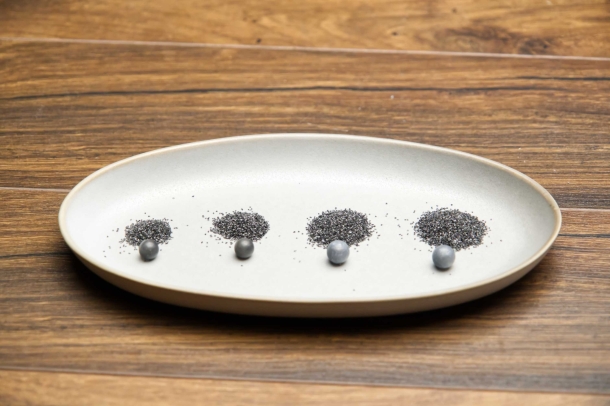
Powder charge comparison, left to right: .36 target load (13 grains), .36 full load (21 grains), .44 Army full load (30 grains), Dragoon and Walker full load (50 grains).
Finally, the myth of the Remington being more accurate than the Colt due to the closed frame and frame-cut rear sight, compared to Colt’s open frame and rear sight cut in the hammer’s nose.
There may be a point in this, after all Remingtons have won match after match, but tests in a machine rest have shown how both guns are remarkably accurate, much more than what the average shooter can get out of them off hand, so it is mostly a moot point, if not for the fact that the Remington might be just a bit easier to shoot accurately than the Colt, since its sights are easier to use, but this is relevant only in shooting high end matches for very experienced shooters.
From a practical standpoint, for a beginner shooter, the slight theoretical advantage of Remington’s sights is not worth the hassle of a gun that is more sensitive to fouling.
Also, while the Remington may be a bit more accurate in carefully aimed fire, there is just no comparison with the Colt belt pistols in instinctive, point shooting. They are just like a magic wand, unfailingly hitting where you are looking at, even when shooting with the gun lower than your eyes, without any use of the gun’s sights. I’ve personally proved this time and again, having a Colt 1851 Navy tested by shooters that were not accustomed to revolvers, even less cap and ball ones, or rookie shooters that hadn’t shot much at all.
A factor that has helped to increase the popularity of the Remington 1858 model among shooters is the fact that taking advantage of its closed frame, in the past 30 years modern Italian manufactures have also offered variants equipped with match grade barrels, technically able to realize 6 shot groups below 2 inch at 25 meters. But cost for these competition revolvers is susually twice as much as a regular one, and worth spending only if you are a top shooter.
Training and practice trump equipment every time and, given the choice between spending your hard-earned money between a fancy gun or a more affordable one and more ammunition, range time and training, always go with the latter.
Colt Navy and Army revolvers: still a preferred choice
As a matter of fact, Colt open-frame revolvers are still today the most popular choice among shooters, and for very good reasons. But which model to choose?
We can choose between the Colt Navy 1851, Colt Navy 1861 or the Colt Army 1860. The Navy models are .36 caliber; the Army models are .44 caliber. There is nothing wrong with either one, and both are excellent choices.
The .36 caliber Colt 1851 Navy is a great classic, considered the best black powder revolver ever made, and among the most elegant ever, The Colt Navy 1851 is accurate, incredibly well balanced and points marvelously.

Bautiful Uberti replicas of a .44 caliber Colt 1860 Army and a .36 caliber Colt 1851 Navy
The .44 caliber Colt 1860 Army has sleek lines that some declared “the most beautiful revolver of the west”, and is the gun of choice if you really like large caliber revolvers. If you want the sleek lines of the Colt 1860 Army, but you prefer a gun that is more affordable to shoot, go for the .36 caliber Colt 1861 Navy model.
A Remington 1858 New Army revolver in .44 caliber is also a great choice, but its design is a preferred one by competition shooters, because the closed frame of this model provides a more constant and reliable performance in terms of "absolute shot grouping" ability on the target: but this can make the difference only if you are an experienced top competition shooter able to place 6 shots in 2 inches at 25 meters.
Whether .36 or .44 in caliber, any of these guns will be a great choice as a first cap and ball revolver. The .36 Navies have the advantage that they use less lead and less powder, making shooting more affordable, without any loss in accuracy or practical effects on a paper target.
The big Colt Walker and Dragoon revolvers, as well as the small Colt Pocket 1849 and 1862 models can be excellent shooter, but their design is not a good choice for anyone willing to approach "shooting" a black powder revolvers for the first time, unless what you are looking for is "to get deep in revolver history and evolution" and understand how it all started.

The Remington 1858 New Army (here a Uberti replica) is a great revolver to start your journey into cap and ball revolvers.
FREQUENTLY ASKED QUESTIONS

The 1851 Navy (here an Uberti replica) is easy to load, accurate, reliable and uses lead and powder sparingly: an ideal gun to begin with.
Q: are Colt Walker and Colt Dragoon models a good choice as a first black powder revolver?
A: No. The Colt Walker and Dragoons are very hefty guns, nose heavy, difficult to shoot accurately for prolonged periods of time. Moreover, they eat up an enormous quantity of black powder, making them expensive to shoot.
Walker and Dragoon revolvers were not intended for precision target shooting, and suffered from some minor problems. On the Colt Walker the loading lever often detached from the barrel under heavy recoil, a quite disturbing issue for a beginner. Walker and Dragoon revolvers are great (literally as well) and very exciting to shoot, but are more suitable for history enthusiasts than for those interested in target shooting.
Q: Are the Colt Pocket models a good choice as a first black powder revolver?
A: Colt Pocket revolvers were very popular as self defense pistols back in their days, but today they are not the best choice as a range gun for a beginner. While light and cheap to shoot, their very small size makes Pocket revolvers hard to shoot accurately.
Q: Are the LeMat or the Starr revolvers a good chouce to start with?
A: They are very interesting collector pieces, and fun to shoot, but are best left for reenactors, but their peculiarities, complex mechanism and steep price tag make them unsuitable as a first cap and ball revolver.
Q: Is the Remington New Model Army more reliable than Colt revolvers?
A: While at first glance it may seem so, the answer is no. The Colt’s massive cylinder arbor gives Colt open frame revolver as much sturdiness as Remington’s closed frame.
Moreover, the Remington design is more subject to fouling issues, due to its small cylinder arbor and closed frame. Colt’s open frame revolvers are less prone to suffer from fouling, and the massive cylinder arbor has a spiral cut that collects grime and fouling, keeping the gun working long after the action of a Remington start to become sluggish.
Q: Are the Colt Navy or Colt Army revolvers suited as first cap and ball revolvers?
A: Yes, definitely: their ease of loading, excellent balance, ease of shooting, low running expenses, accuracy and how they naturally point to the target all make them great first cap and ball revolvers. Maintenance is also very easy, the mechanics are well known and spare parts comparatively easy to get.
Q: .36 or .44 caliber: which one is best as a first choice for a beginner?
A: Both .36 or .44 caliber are a good choice to begin with. The only real difference is in the running costs of the two calibers, as .36 caliber revolvers use up less powder and lead. This said, choosing between a Colt Navy 1851, Army 1860 or a Navy 1861 is just a matter of personal taste in preferring one desging or another.
