



Building a role-specific AR-15: parts choices for home defense, long range shooting or hunting
The AR-15 is arguably the most versatile rifle platform available today, and with the right parts it can be configured to fit basically any role and any use: let's have a look
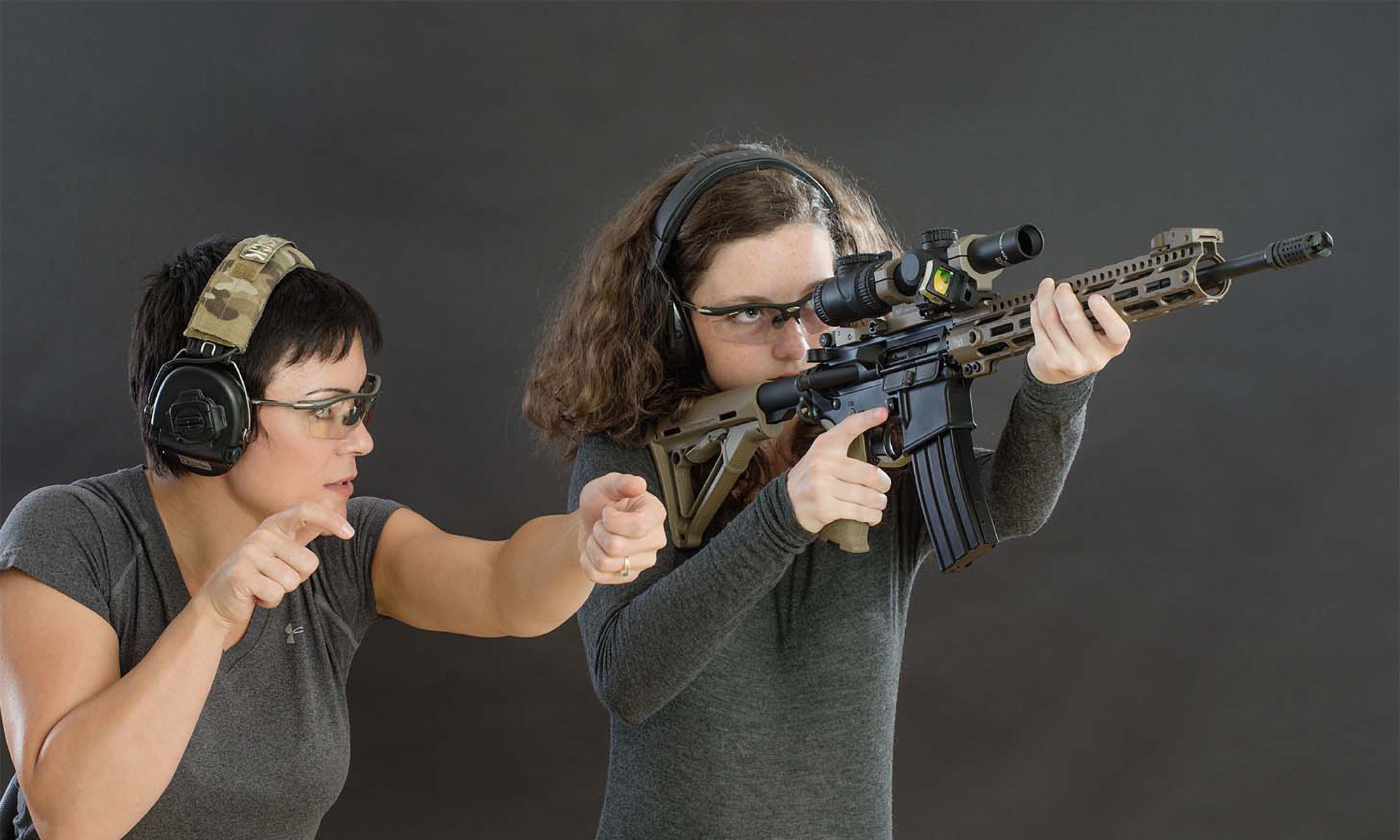
Building a role-specific AR-15: parts choices for home defense, long range shooting or hunting
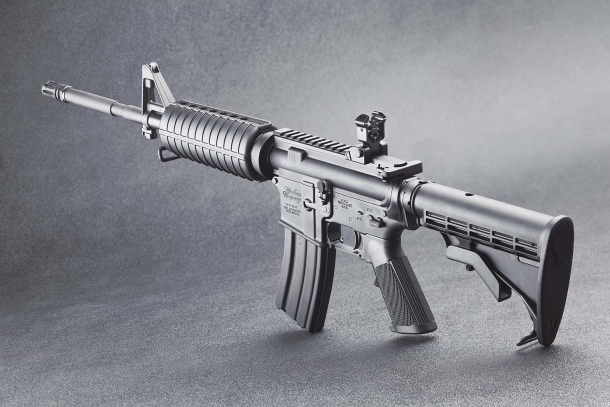
The AR-15 platform's enduring appeal comes down to one thing: adaptability. The same action, the same manual of arms, and largely the same skillset applies whether you're running a 10.5" pistol-length build for home defense or a 24" heavy-barrel rifle dialed in for 800-yard precision work.
But treating all three roles as interchangeable. Buying one "do-it-all" rifle and calling it a day means accepting real compromises in every direction.
Enthusiasts who have spent time behind multiple purpose-built ARs understand this intuitively. The parts choices that make a home-defense gun genuinely fast and reliable in a hallway at 0300 are actively counterproductive at the range bench.
The trigger work that makes a hunting build perform at 400 yards on a whitetail is wasted weight and cost on a close-range defensive gun. And a rifle optimized for precision work carries, handles, and tracks completely differently than one configured for field use.
Each role rewards a different set of priorities, and getting those priorities right at the parts level is how you end up with a rifle that actually performs its job.

Home defense: prioritizing speed, reliability, and maneuverability
Barrel Length and Profile
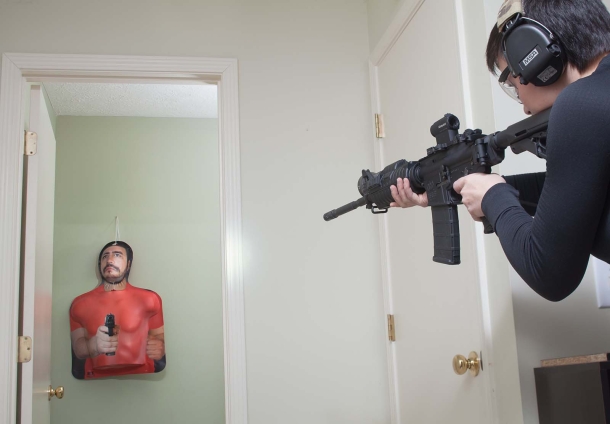
For a home-defense build, the goal is a rifle you can move through interior spaces without telegraphing your position around corners or flagging furniture. A 16" barrel is the legal minimum for a standard rifle configuration without an NFA stamp, and it works well. A 14.5" barrel with a permanently attached and pinned muzzle device gets you to 16" overall while keeping velocity and dwell time more favorable compared to a true SBR.
If you are running a short-barreled rifle or pistol-configuration build, a 10.5" to 12.5" barrel is common. Understand the tradeoff clearly: shorter barrels mean incomplete powder burn with standard-length 5.56 loads, significantly increased muzzle blast and concussion in enclosed spaces, and a potential reduction in reliable cycling. This is especially pronounced when running suppressed with heavier subsonic ammunition.
A lightweight or government-profile barrel is the correct call here. A heavy-profile barrel adds weight with no practical benefit when your shots are measured in yards, not hundreds of meters. Keep the total weight of the build manageable.
Handguard
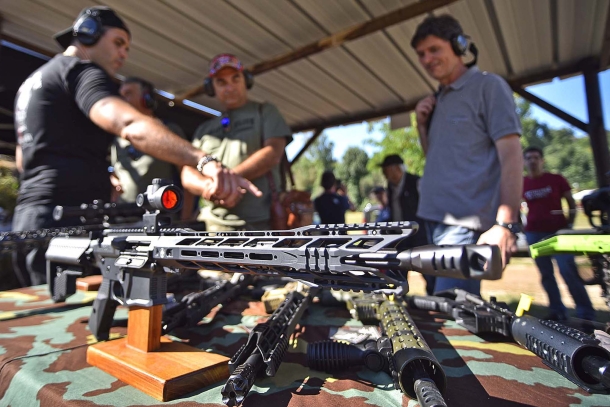
Free-float handguards have become the standard even on defensive builds, and for good reason. A rigid, free-floated rail improves barrel harmonics, gives you a consistent grip point, and eliminates point-of-impact shift from bipod or barrier pressure.
For home defense, M-LOK is preferable to full Picatinny for weight management. You attach only what you need, typically a weapon light and possibly a barricade stop, and nothing else.
Length matters here. A mid-length or carbine-length handguard keeps the gun balanced and maneuverable. A 15" handguard on a 16" barrel is not necessary for a defensive build and only adds length to manage.
Trigger
For home defense, a mil-spec trigger is entirely acceptable. You do not need a single-stage flat trigger with a 2.5 lb break on a rifle that may be used under extreme physiological stress, poor lighting, and degraded fine motor control. If you want a meaningful improvement, a drop-in group like the LaRue MBT-2S or Geissele SSA gives you a cleaner, more consistent pull without going so light that you introduce legitimate liability concerns or risk of unintended discharge under adrenaline.
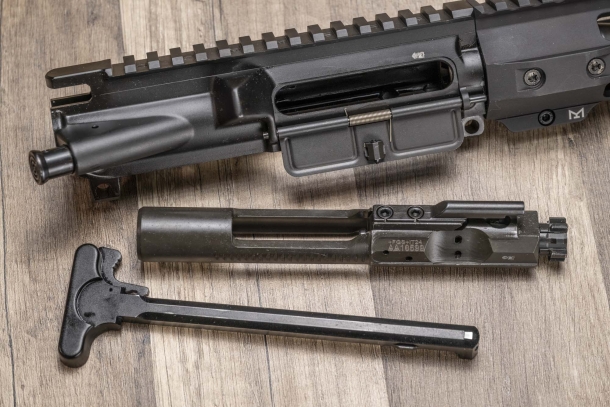
BCG and Buffer System
Use a full-mass, properly staked mil-spec BCG from a reputable manufacturer. This is not where you experiment with lightweight components on a defensive rifle. Reliability is the only metric that matters. Match your buffer weight to your gas system length and barrel length. Carbine-length gas systems on 16" barrels tend to run better with a heavier H or H2 buffer to manage the faster, snappier cycling impulse.
Optic
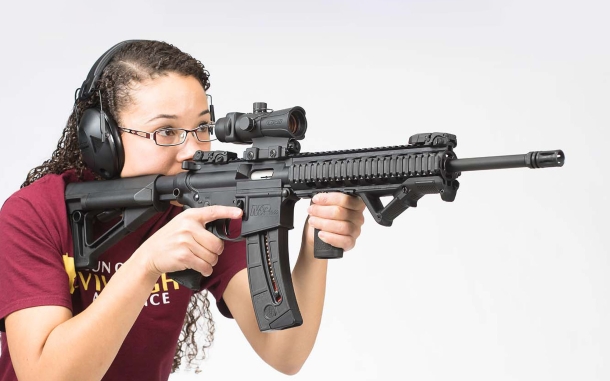
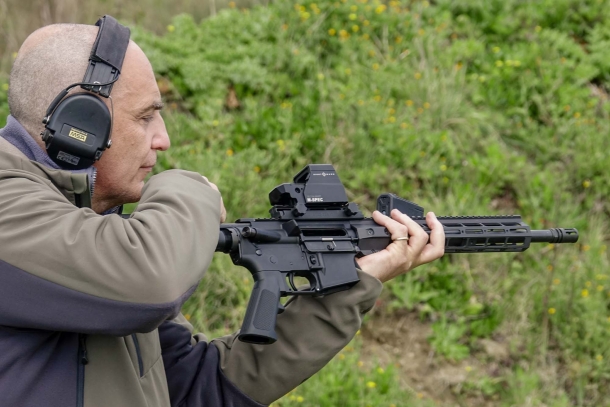
A quality red dot or low-power variable optic set at 1x is the standard for this role. Close-quarters use demands fast, both-eyes-open target acquisition, and a fixed 4x scope has no place on a defensive gun. The Aimpoint PRO, Holosun 510C, or a budget-conscious Primary Arms red dot all serve this role effectively. If you want flexibility without sacrificing speed, an LPVO with a true 1x setting and an illuminated center dot competes directly with a red dot for acquisition speed.
Long-range precision: building for accuracy and consistency
Barrel
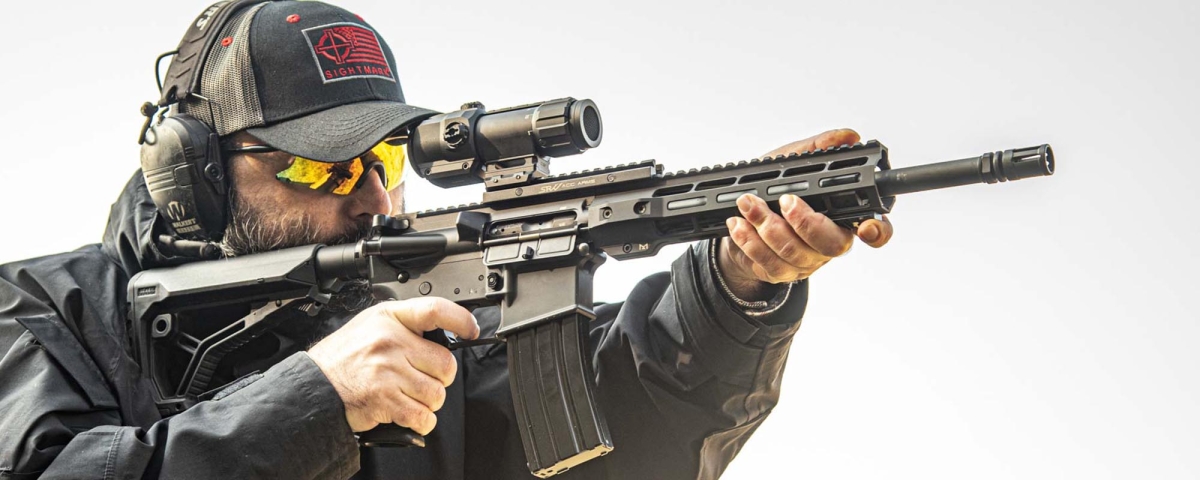
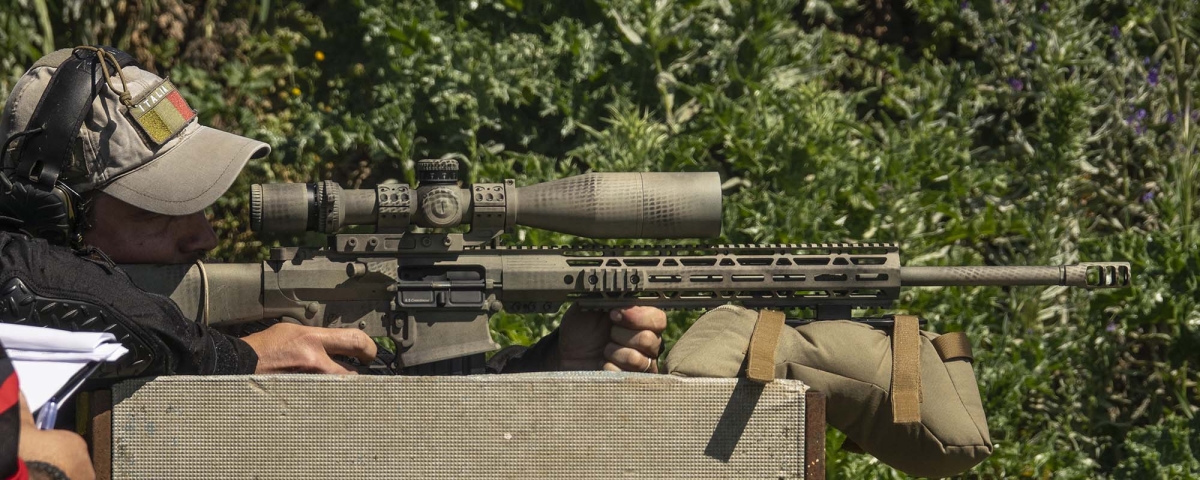
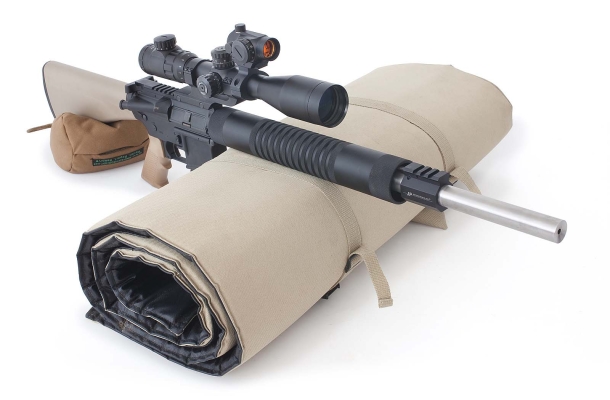
This is where the build budget should concentrate. For long-range work, a heavy or bull-profile 18" to 24" barrel in a caliber genuinely suited to the distances you're shooting matters more than almost any other component on the rifle.
5.56 NATO runs out of practical steam past 600 yards for most shooters. Serious long-range AR shooters have largely moved to calibers like 6.5 Grendel, 6mm ARC, or .224 Valkyrie for their superior ballistic coefficients, flatter trajectories, and retained energy at distance. If you are staying with 5.56, a 1:7 or 1:8 twist rate handles heavier 77gr and 80gr match bullets efficiently, which is where the caliber genuinely shines at range.
Barrel material matters here. A stainless steel barrel holds tighter tolerances over heat cycles than chrome-lined carbon steel, at the cost of some corrosion resistance and longevity under sustained fire. For a dedicated range rifle that sees proper cleaning after every session, stainless is the correct choice.
Handguard and stock
Long-range shooting benefits significantly from a longer handguard that pushes your support hand further forward, reducing the moment arm and improving your ability to hold a natural position under the rifle.
A 15" or 17" free-float rail paired with a quality bipod-compatible forend works well here, especially when running a Harris or Atlas bipod.
A fixed or precision-style stock (the Magpul PRS, B5 Systems SOPMOD, or a dedicated chassis system) adds the adjustability and cheek weld consistency that translates directly into better eye relief, more repeatable prone and bench positions, and reduced shooter-introduced error. A carbine stock has no business on a precision rifle.
Trigger
A high-quality, predictable single-stage trigger is essential for precision work. The break weight, reset, and overtravel all directly affect your ability to call shots cleanly and stay on target for follow-up.
Geissele's Hi-Speed National Match, TriggerTech Diamond, and CMC flat-bow triggers all have strong track records in this role. Budget permitting, aim for a 3 to 3.5 lb crisp break with minimal overtravel and a short, positive reset.
Optic
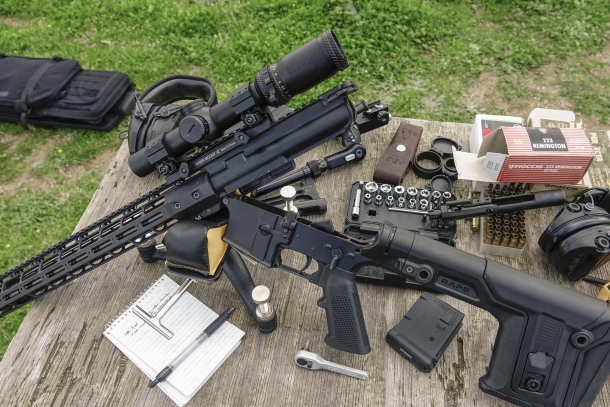
A first focal plane scope in the 4-16x or 5-25x range gives you the reticle subtension accuracy you need for dialing holds, reading wind, and making precise adjustments at extended ranges.
FFP reticles maintain their subtension values at any magnification, which matters when you're shooting at variable ranges and making on-the-fly holds rather than dialing. Brands like Vortex Razor, Primary Arms MRAD, and Nightforce occupy different points on the price-performance curve. If you are seriously committed to precision work past 800 yards, optic quality is second only to barrel quality in its effect on results.

Hunting: balancing weight, terminal performance, and field reliability
Caliber and barrel
Hunting with an AR-15 has expanded well beyond the traditional varmint and predator use case. Modern calibers have pushed the platform into legitimate deer and hog hunting territory, and in many states it is now a common and effective choice for medium-sized game.
For deer-sized animals at realistic hunting distances under 300 yards, .300 Blackout with supersonic 110-125gr expanding loads, 6.5 Grendel, or .450 Bushmaster in states with straight-wall cartridge requirements all offer significantly better terminal performance than 5.56 on body shots. Each of these calibers requires a dedicated upper assembly, while the lower receiver stays the same, which is the platform's major advantage here.
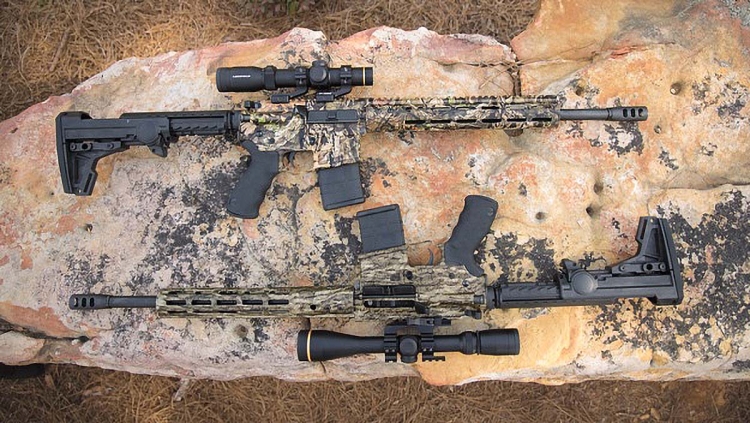
Barrel length for a hunting build typically lands in the 16" to 18" range as a practical compromise between velocity, portability, and maneuverability in thick cover. A fluted barrel reduces weight without sacrificing too much stiffness. Stainless steel with a Cerakote or QPQ finish handles moisture and field conditions better than bare stainless, which is worth prioritizing if you hunt in wet climates.
Weight management
Hunters care about carry weight in a way that bench shooters and home defenders largely do not. A rifle you carry all day on foot through varying terrain needs to be as light as practicable without compromising reliability or accuracy at field distances. An M-LOK carbon fiber or thin-wall aluminum handguard, a skeletonized or minimalist fixed stock, and careful optic selection can trim meaningful weight from a hunting build.
Sourcing quality parts that hit the right balance of weight, durability, and caliber compatibility is worth doing thoroughly. A resource like AR15 Parts is genuinely useful when cross-referencing compatible components across different caliber upper configurations, particularly when building a dedicated hunting upper on an existing lower that already hosts a different build.
Trigger
A clean, consistent 3.5 to 4.5 lb single-stage or light two-stage trigger makes a real difference on precise shots at field distances, where a hunting shot may come after a long stalk, elevated heart rate, and cold hands. You do not want a heavy, gritty 7 lb mil-spec pull when you are making a careful, deliberate shot on a stationary deer at 200 yards. This is one of the higher-return upgrades on a hunting build.
Optic
A 1-4x or 1-6x LPVO covers the realistic range of most hunting scenarios in North America. Shots in dense brush may happen at 20 yards; an open sendero or agricultural field shot might stretch past 250. A low-power variable with an illuminated center reticle handles both situations without the weight and bulk penalty of a full precision scope, and without the tunnel vision of a high-magnification fixed optic in close cover.
Where the three builds agree
Despite their different requirements, a few principles apply across all three roles.
- Don't cheap out on the BCG: A quality bolt carrier group from a reputable manufacturer (properly staked gas key, MPI-tested bolt, correct headspacing) is non-negotiable regardless of what the rifle is built to do. This is where cutting corners creates real problems.
- Gas system length should be matched to barrel length: Mid-length gas on a 16" barrel is often preferable to carbine-length if the port is cut for it, offering a softer, more reliable impulse and longer component life. A properly timed gas system reduces felt recoil, extends the service life of the BCG and barrel extension, and improves reliability with a wider range of ammunition.
- Ammo drives parts choices: Your twist rate, gas port sizing, and buffer weight should all be selected with your primary ammunition in mind. Building a rifle in a vacuum, choosing parts without knowing what it will primarily feed on, is working backwards and often produces a gun that runs poorly on the ammo you actually use.

Final thoughts
The AR-15's modularity is its greatest asset, but only if you use it deliberately. Building a rifle specifically configured for its intended role, rather than defaulting to a generic setup that adequately serves nothing, produces a firearm that genuinely excels at the job you have in mind.
Whether you are setting up a purpose-built defensive gun, investing in a precision long-range platform, or configuring a hunting upper around your target species and terrain, the parts choices matter and compound.
Spend the research time upfront, be honest about what the rifle will actually be asked to do, and build accordingly. The platform rewards that kind of intentionality.
Building a role-specific AR-15: parts choices for home defense, long range shooting or hunting
Building a role-specific AR-15: parts choices for home defense, long range shooting or hunting