
Battle belts explained: how inner and outer belt systems work for range training
A battle belt is often the first piece of load-bearing gear a shooter buys after a holster: understanding how a two-piece system works, how to size it and lay it out saves money and a lot of frustration on the range
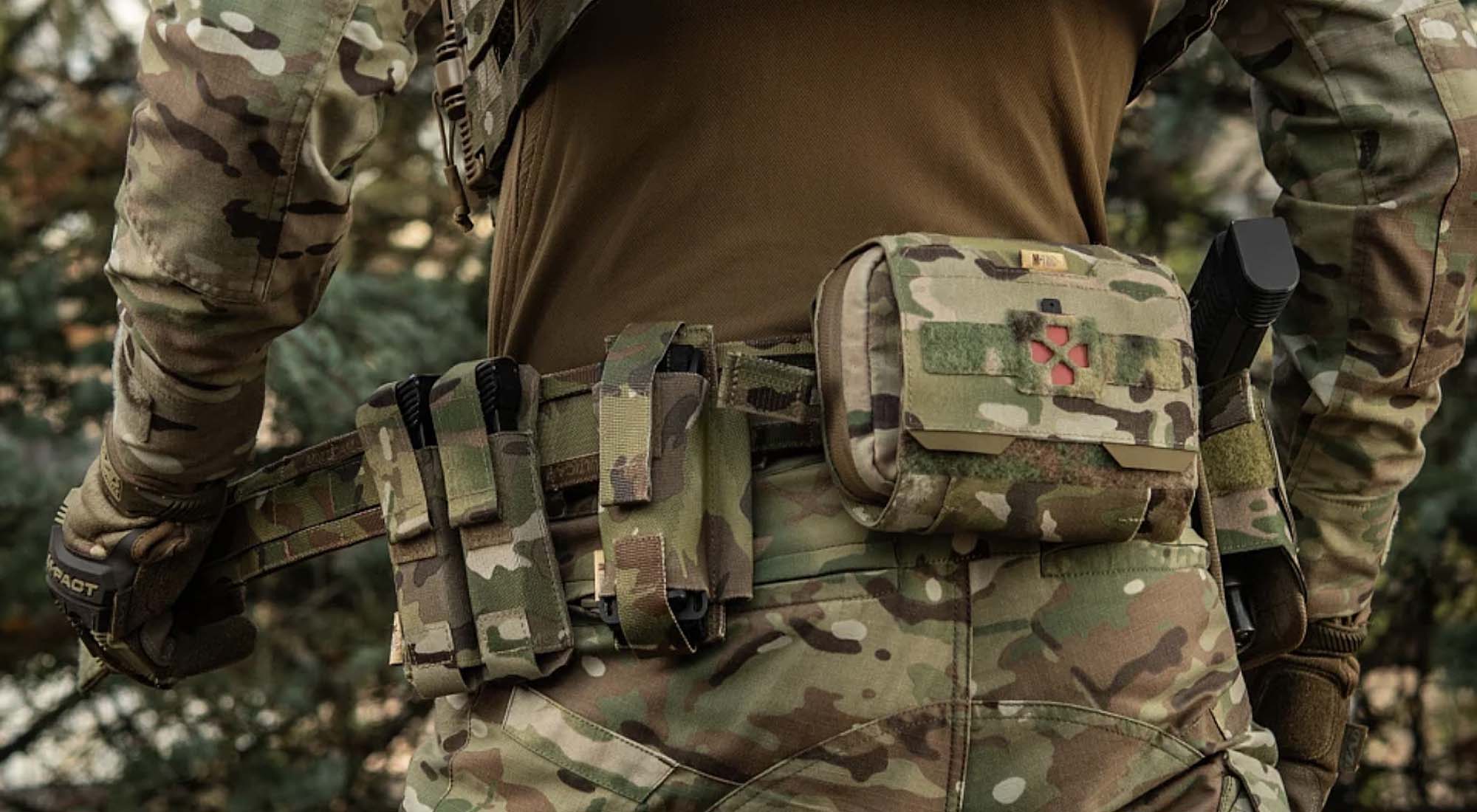
How two-piece battle belts work: how to size them, and where to put the holster, magazines, tourniquet and dump pouch on range day

For many shooters, battle belts sit between a simple gun belt and a full plate carrier or chest rig.
A battle belt holds a holster, a few magazines, medical gear and a dump pouch, and it can be put on or taken off in seconds.
Done right, it carries a loaded pistol without sagging and keeps reloads in the same place every time.
Done wrong, it slides, twists and drags trousers down after the first few drills.
Most of the difference comes down to one design choice: the two-piece inner and outer belt system.


What a battle belt actually does
A battle belt is a minimal fighting load. It is not meant to carry everything. The goal is to keep the essentials for shooting and immediate first aid on the hips, where weight is easier to carry than on the shoulders, and where it stays out of the way when going prone or getting into a vehicle.
A typical range setup includes a pistol holster, two pistol magazines, one or two rifle magazines, a tourniquet, a small trauma kit and a dump pouch for empty magazines. Anything beyond that should earn its place.
How the inner and outer belts work together

In a two-piece system, the inner belt threads through the trouser belt loops like a normal belt.
The outer belt, which carries all the gear, wraps around it and locks on with hook-and-loop fabric lining the two surfaces. One belt carries the hook side and the other the loop side, so the two lock together along their whole length.
This setup solves three common problems:
-
Sag and rotation. A single belt carrying a loaded holster tends to roll outward and slide around the waist. The hook-and-loop connection anchors the outer belt to the inner one, so the gear stays in position.
-
Quick on and off. The outer belt comes off as one unit with all pouches attached and goes back on in the same position every time. That consistency matters for building a reliable draw and reload.
-
Everyday use of the inner belt. Many shooters wear the inner belt on its own day to day, so the base layer is already in place when it is time to train.
There are trade-offs. Hook-and-loop collects dirt and grass, which reduces its grip over time, so it needs an occasional cleaning.
A heavily loaded belt can also pull trousers down if the inner belt and trousers are not cinched properly.


Sizing: width and fit
Width is one of the most overlooked details. Outer belts are commonly 1.¾" or 2 inches wide, which gives enough surface for MOLLE pouches and keeps the belt stiff. The inner belt is the one that has to fit through trouser loops.
Some systems use inner belts that are too wide for standard trousers, so it is worth checking belt loop width before buying.
Fit matters as much as width. The belt should sit snug on the hips with the inner belt tight enough that the whole system does not shift when moving or kneeling. Trying it on over the trousers usually worn for training gives the most accurate result.
Why stiffness matters

A soft belt folds under the weight of a holster and magazines.
A stiff outer belt spreads the load around the hips and keeps the holster at a consistent angle.
Many modern outer belts use a composite insert for this.
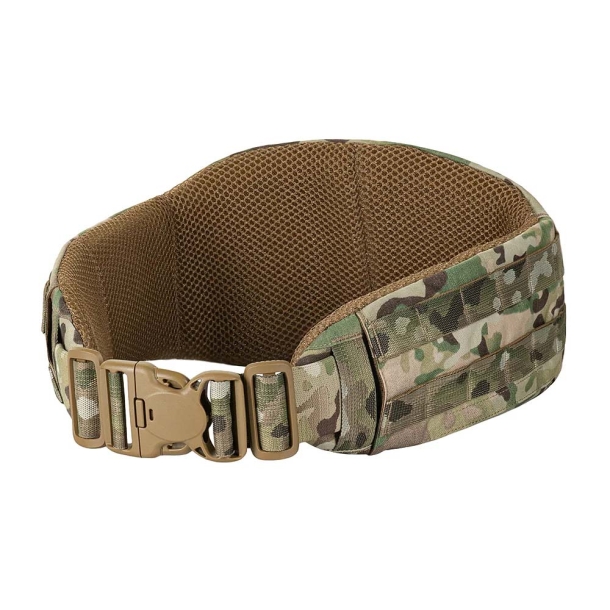
The M-Tac Range Belt Cobra Buckle Gen.IV, for example, pairs an outer belt made from Tegris thermoplastic composite covered in Cordura Squadron with a Cordura inner belt that uses VELCRO brand hook-and-loop and a metal ring for sizing.
It closes with a 25 mm Cobra buckle protected against accidental opening, which keeps the belt from coming undone during movement drills.
Laying out the belt

A simple way to plan the layout is to picture the belt as a clock face, with the buckle at 12 o’clock and the small of the back at 6.
For a right-handed shooter:
-
Holster: strong-side hip, around 3 to 4 o’clock.
-
Pistol magazines: support-side front, around 9 to 10 o’clock.
-
Rifle magazine: support side or centerline front, positioned so it never blocks the draw.
-
Tourniquet: somewhere both hands can reach, since there is no way to know which arm might be injured.
-
Dump pouch: support-side rear, around 7 to 8 o’clock.
-
Small of the back: kept clear. Gear in that spot digs into the spine when sitting, driving or lying on the back.
Left-handed shooters simply mirror the layout.
Whatever the setup, it is worth testing the draw while wearing any plate carrier or chest rig that will be used with the belt, because a carrier can easily block a holster positioned too high or too far forward.


When the load gets heavier
A lean belt rarely needs extra support. As the load grows with more magazines, water or larger medical kits, some shooters move to a padded war belt that accepts shoulder straps.
The M-Tac War Belt Armor, for instance, uses Cordura 500D with a MOLLE interface, a padded mesh interior, internal adjustment straps and compatibility with optional shoulder harness straps. At that point the system starts to behave more like full load-bearing equipment, and the trade-off is extra bulk and more straps to manage.
Build it, then train with it

Some of the most common mistakes you can make when setting up your battle belt include:
-
Overloading. Adding gear “just in case” turns a fast, minimal belt into a heavy one that drags trousers down and slows movement.
-
Skipping the inner belt. Without it, a loaded outer belt rolls and sags.
-
Changing the layout often. Reloads become reliable only when the magazines are in the same place every time. Training, competition and range days should use the same configuration.
-
Ignoring the tourniquet. A belt that carries a pistol and spare magazines should also carry a way to stop serious bleeding.
A battle belt works best when it is simple, stiff and consistent.
Start with the essentials, wear it through several range sessions, and adjust only when something gets in the way. The right setup is the one that disappears during training and puts every reload exactly where the hand expects it.