



How does real-time firearm detection using existing security cameras actually work?
Learn how real-time firearm detection using existing security cameras works, explore AI gun detection technology, accuracy, deployment models, response times, and compliance considerations for schools and enterprises
Real-time firearm detection using existing security cameras: how AI gun detection works in 2026

Most organizations already have security cameras installed. The real question is this: can those cameras do more than just record incidents after they happen?
With rising concerns around active shooter events and weapon-related violence, many schools, offices, and public facilities are asking whether real-time firearm detection is possible using their current infrastructure.
The short answer is yes. The longer answer involves artificial intelligence, edge computing, multi-model validation, and rapid alert workflows that can operate in seconds.
This article will break down how real-time firearm detection works; what accuracy actually means in AI weapon detection; how existing IP cameras can be upgraded; what response times look like in real deployments; and the compliance and operational considerations you need to understand.
All is data-backed and grounded in how the technology is actually implemented in 2026.
Why real-time firearm detection matters now

According to the FBI’s 2023 Active Shooter Report, there were 48 active shooter incidents in the United States in 2023, an increase from previous years. Educational institutions and commercial properties continue to be among impacted locations.
Traditional surveillance systems are reactive. They record video. They may store footage for 30 to 90 days. But they do not actively interpret what they are seeing.
The average human operator can effectively monitor only 4 to 6 video feeds at a time before fatigue reduces detection accuracy. Large campuses may have hundreds of cameras.
This is where AI-powered firearm detection changes the model. Instead of waiting for a report or manual review, AI systems analyze every video frame in real time and generate alerts the moment a firearm appears.

What is real-time firearm detection?
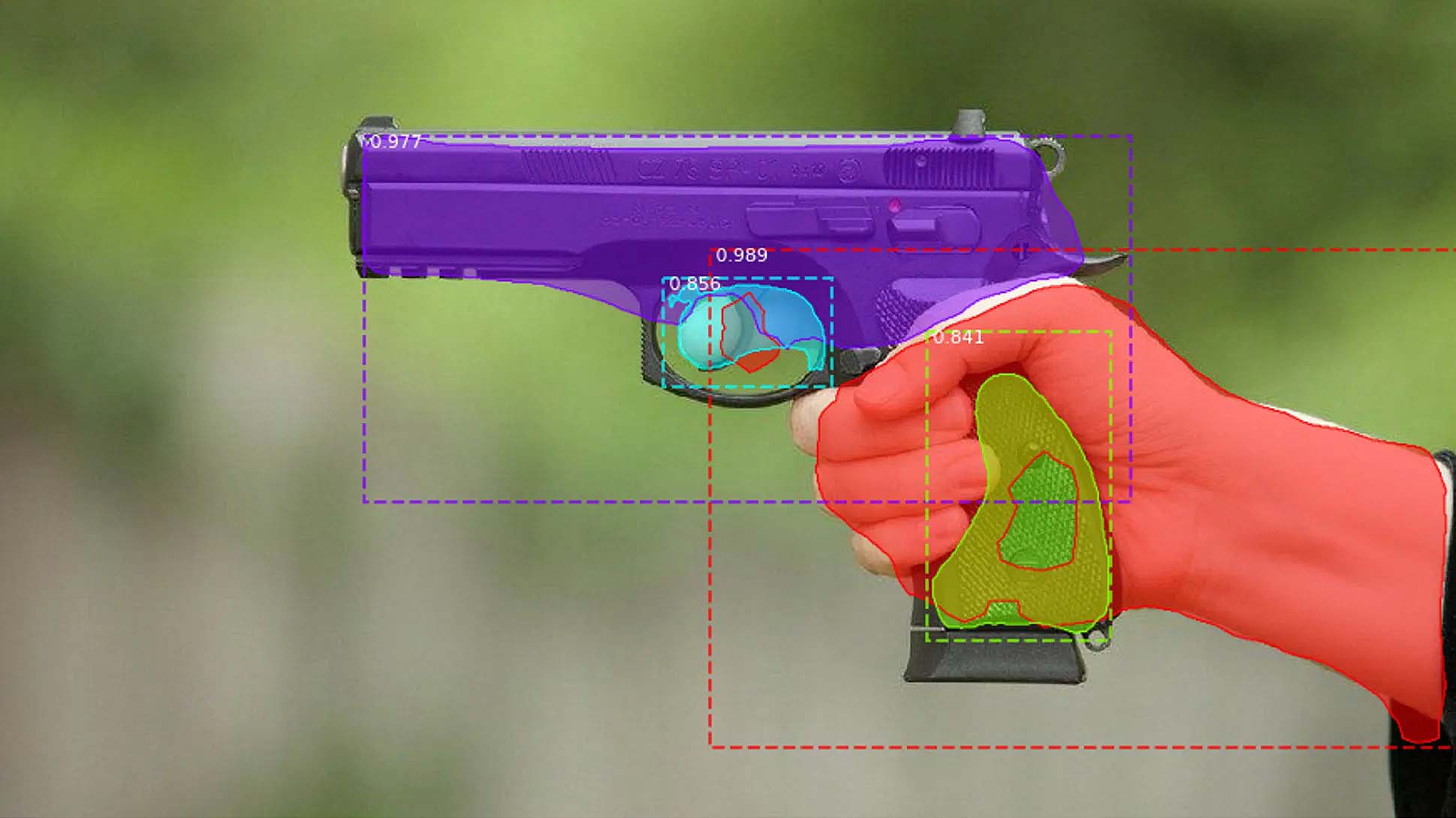
Real-time firearm detection is a computer vision capability that analyzes live video feeds from existing IP cameras, identifies brandished firearms such as handguns and rifles, validates detections using multiple AI models, and sends alerts within seconds.
The key term is real-time. In most enterprise-grade systems, alert latency ranges between 2 to 10 seconds, depending on deployment architecture.
This speed matters. According to emergency response research, each minute of delay in active shooter scenarios increases casualty risk significantly. Early alerting can change outcomes.
How AI gun detection works (step by step)

Let’s break down the technical flow in practical terms:
◘ Frame-by-frame video analysis
Modern AI gun detection systems process video at the frame level. A 30 FPS camera generates 30 frames per second. AI models evaluate each frame looking for weapon-like objects.
◘ Object detection models
The system uses trained neural networks that have been exposed to thousands of firearm images, different angles and lighting conditions, and varied environments (indoor, outdoor, hallway, parking lot); these models look for shape, contours, grip patterns, barrel orientation, and how the object is being held.
◘ Multi-model validation
High-quality systems do not rely on a single AI model. They run multiple models in parallel to reduce false positives. For example:
-
Model A detects object shape
-
Model B validates context (is it brandished?)
-
Model C confirms classification (handgun vs long rifle)
This layered validation improves precision.

◘ Edge processing
To reduce delay and internet dependency, many systems process video locally at the edge. This means detection runs on a device on-site, not entirely in the cloud.
Edge processing reduces latency and ensures operation even if bandwidth fluctuates.
◘ Cloud confirmation and alert workflow
After initial detection, data can be sent to the cloud for additional verification before triggering alerts. This second layer further reduces false alarms.
Once confirmed, alerts are sent to security teams; SMS, app, or dashboard notifications are triggered; and optional emergency response workflows activate.

Example of AI gun detection running on existing cameras

Some modern systems are built specifically to work with existing IP camera infrastructure rather than requiring hardware replacement.
For example, Coram’s AI gun detection system works with existing IP cameras and can be deployed in minutes. The system analyzes every video frame locally using proprietary foundation models running on Coram Point devices.
These models detect brandished firearms, including handguns and long rifles, without requiring internet bandwidth for primary detection.
Once a potential firearm is identified, data is sent to the cloud for secondary validation to reduce false positives. If confirmed, alerts are delivered within seconds, and response sequences can be configured to include notifications or emergency services calls.
The system operates without dependence on third-party monitoring, which helps reduce delay in critical situations. This architecture reflects how many advanced firearm detection systems operate today: edge-first detection combined with cloud-level validation.
Accuracy is one of the biggest concerns with AI weapon detection. There are two critical metrics:
-
Precision: How many detections are correct
-
Recall: How many real firearms are successfully detected
In controlled testing environments, advanced firearm detection models can achieve over 95 percent detection accuracy when properly configured. However, real-world performance depends on camera placement, resolution quality, lighting conditions and field of view.
False positives are a serious operational concern; high-quality systems mitigate this by using multiple AI models, by running contextual validation, and by allowing adjustable confidence thresholds. Organizations should always request documented performance metrics and pilot testing before full deployment.
Deployment using existing infrastructure
One of the biggest misconceptions is that firearm detection requires replacing all cameras.
In reality, most enterprise-grade solutions work with standard ONVIF-compatible IP cameras, requiring no change to physical camera placement and integrating through network-level connections.
Deployment typically involves connecting AI processing hardware to the network, linking existing camera streams, configuring alert workflows and conducting live testing. Installation can often be completed within hours, not weeks.
Real-world use cases

◘ Schools and Universities
Schools represent a high-priority use case. Early detection at entry points or hallways enables lockdown protocols to activate faster.
◘ Corporate Campuses
Large corporate campuses benefit from automated alerting across multiple buildings without relying solely on human monitoring.
◘ Healthcare Facilities
Hospitals can integrate firearm detection with access control systems to trigger automatic door lockdowns.
◘ Retail & Public Venues
High-foot-traffic areas use detection to enhance security without hiring additional guards.
◘ Integration with emergency response
Real-time firearm detection becomes significantly more powerful when integrated with access control and mass notification systems, panic/alarm button platforms, and law enforcement communication channels.
For example, a detection alert can automatically lock specific doors; trigger PA announcements; send building-wide notifications; and share live video feed with responders. Automation reduces reaction time.
◘ Privacy and compliance considerations
AI gun detection analyzes objects, not identities. However, organizations must ensure compliance with local privacy regulations, secure data storage, limited access to video archive, and clear documentation of usage policies.
In the U.S., most deployments are legally permitted in public or commercial spaces when used for safety purposes.
Cost considerations
Firearm detection solutions are typically priced based on number of cameras monitored, processing hardware requirements, software licensing, and alert management features Compared to hiring full-time security personnel, AI detection systems often represent a lower long-term operational cost while offering continuous 24/7 monitoring.
Key Takeaways
-
Real-time firearm detection uses AI to analyze live video frame by frame
-
Multi-model validation reduces false positives
-
Edge processing minimizes alert delay
-
Most systems work with existing IP cameras
-
Alert latency typically ranges from 2 to 10 seconds
-
Integration with access control significantly enhances response speed
-
Accuracy depends heavily on camera quality and placement
Conclusion: from passive recording to active prevention

Traditional surveillance records history. AI firearm detection is about preventing escalation. As active threat incidents continue to rise, organizations are shifting from reactive monitoring to proactive detection.
The technology now exists to transform existing camera infrastructure into intelligent detection systems capable of generating alerts within seconds. The key is choosing a system that balances speed, accuracy, and reliability without introducing operational disruption.
What concerns would you have before deploying real-time firearm detection in your facility?